Create
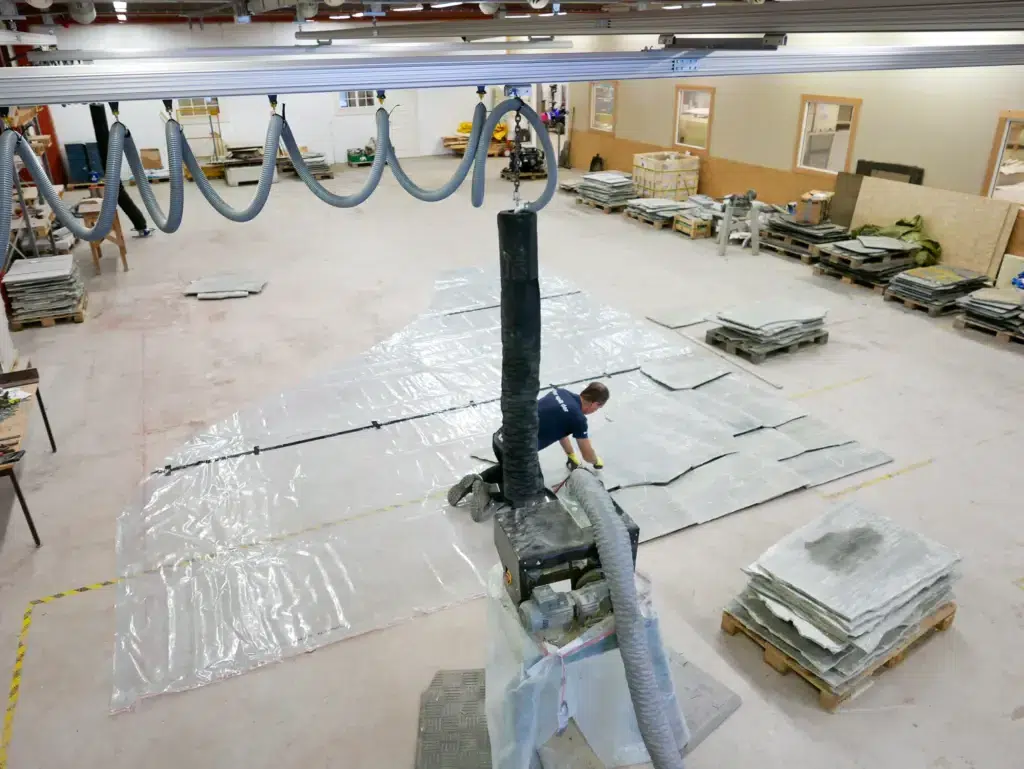
Stone by stone, the complete surface takes form. Each project is created by hand in our production facility. The first stone is selected, shaped and positioned within the full-scale project outline. The next stone is fitted to the first, and the third to the two before it. Stone by stone, the complete surface takes shape. Throughout the process, our craftsmen assess the size and form of each stone, the direction of the joints and the balance of the overall composition. When the final stone is in place, the complete surface is reviewed, numbered and documented before packing.

Every stone is shaped and fitted by hand. Stone by stone, the complete surface takes form.
-
Every surface needs a starting point
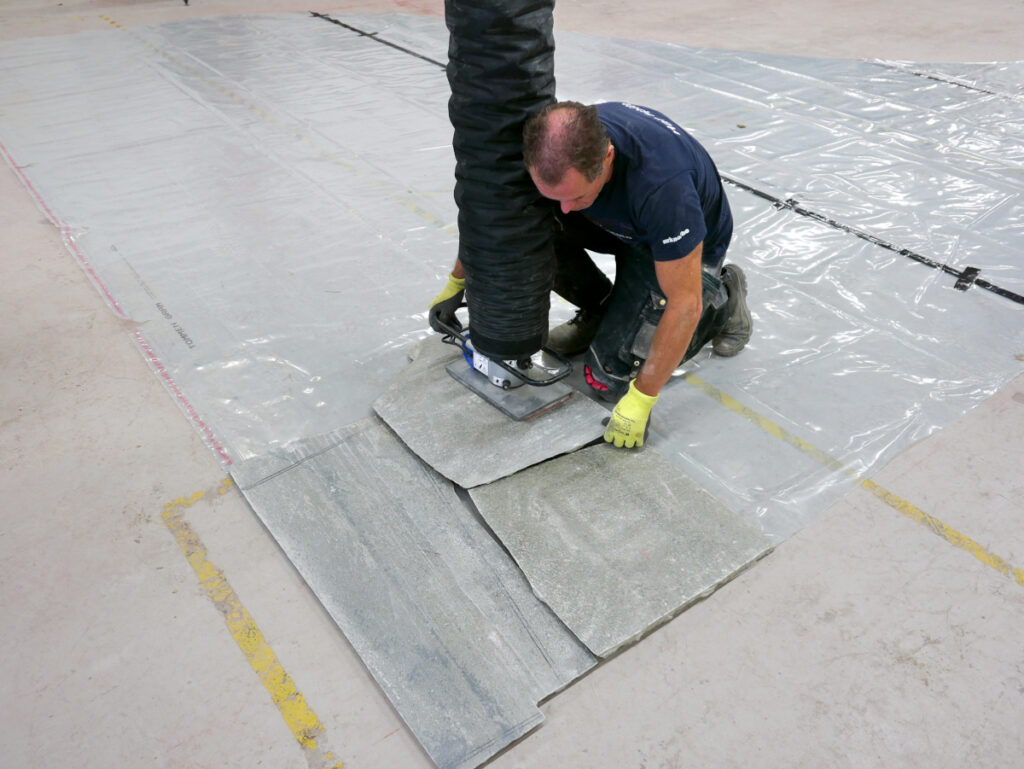
Production begins at the starting point defined during the preparation phase. The first raw slab is selected according to its size, shape, surface and intended position within the project. It is moved into place using vacuum lifting equipment and positioned within the full-scale outline marked on the production floor. The first stone establishes the starting point for the stones that follow
- Position in the project
- Required dimensions
- Natural shape
- Surface and colour
- Thickness
- Edges and adjoining surfaces
- Direction of production
- Direction of production
-
Craftsmanship in every edge
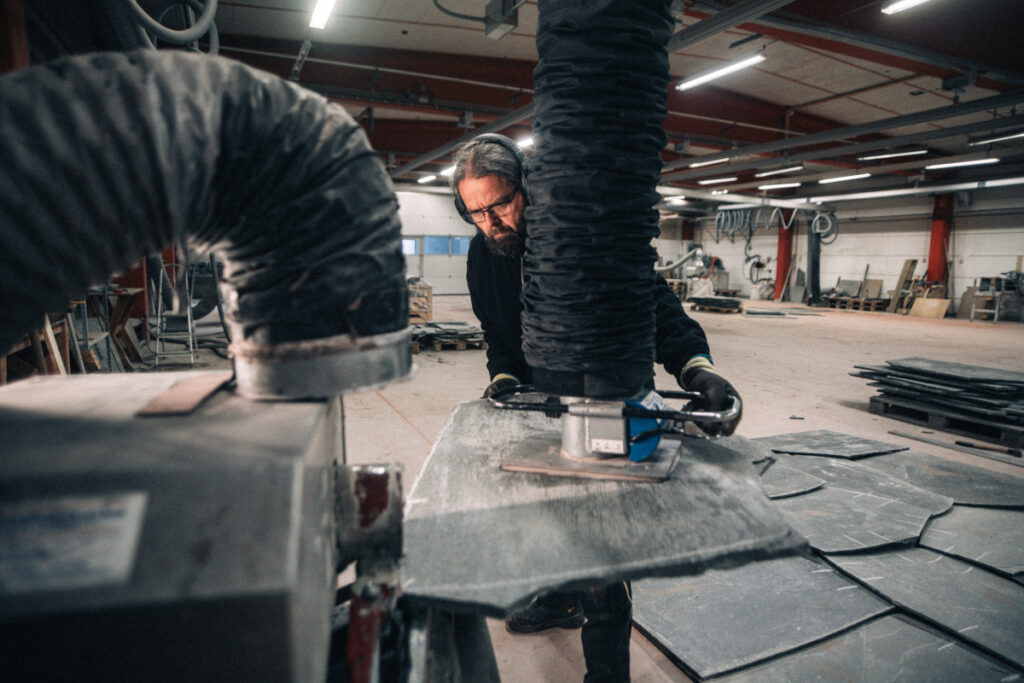
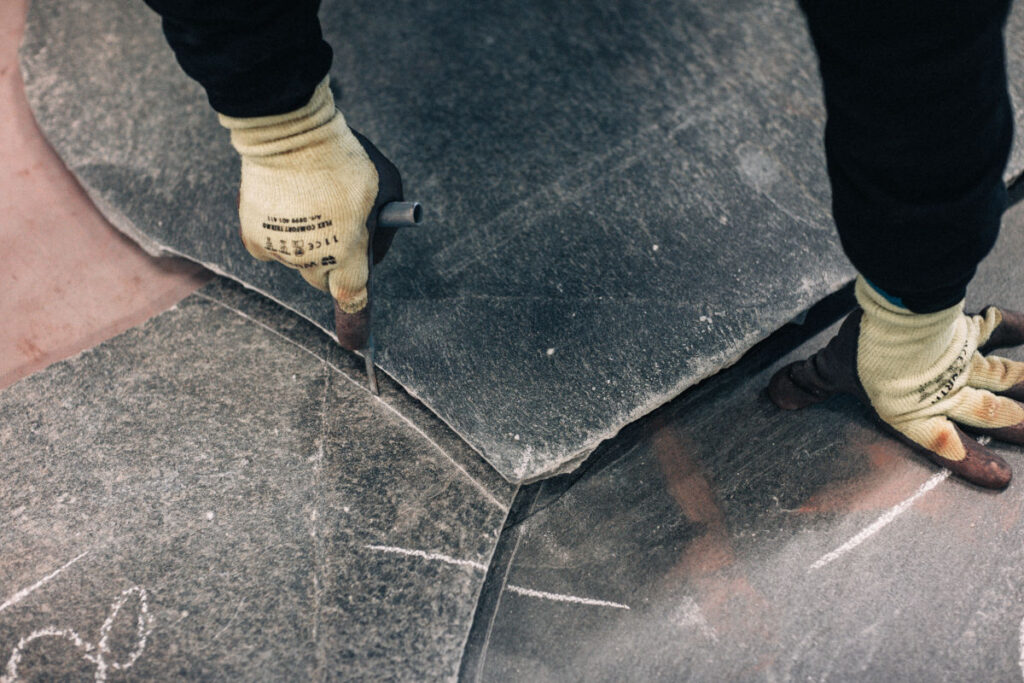
Each stone is individually shaped using traditional slate shears. The craftsman reads the natural structure of the slate and determines where and how the stone should be cut. The edge is shaped gradually, preserving the natural character of the material while adapting it to the surrounding stones. This is skilled manual work. No two stones are identical, and every adjustment is based on the stone itself and its position within the complete surface.
- Selecting the appropriate raw slab
- Reading the natural structure of the slate
- Defining the required shape
- Scoring and shaping the edge
- Preserving the natural appearance
- Controlling the size and proportions
- Testing the stone against adjoining stones
- Making final adjustments by hand
-
The complete surface takes shape
After the first stone has been positioned, the next stone is selected and shaped to fit it. The third stone is adapted to the first two, and the process continues across the full surface. Each new stone becomes part of a growing composition. The craftsmen continuously consider the size and shape of the stones, the direction of the joints and the balance between larger and smaller pieces. The aim is not to repeat a fixed pattern, but to create a coherent surface that makes the best possible use of the natural slate.
- Size and shape of each stone
- Relationship to adjoining stones
- Joint width
- Joint direction
- Avoidance of long, continuous joints
- Distribution of large and small stones
- Natural variation in the material
- Transitions between sections
- Relationship to edges and fixed elements
- Overall visual balance
-
Every stone, and the whole
Quality is assessed continuously as the surface is created. Each individual stone must work together with the stones around it, but it must also contribute to the overall composition. Forms, proportions, joint widths and joint directions are reviewed throughout production. Reference lines and measurement points are used to ensure that the surface remains consistent with the production drawing. Adjustments are made while the stones are still laid out and accessible.
- Shape and proportions
- Joint widths
- Joint directions
- Distribution of stone sizes
- Long or dominant lines
- Small or impractical pieces
- Transitions between sections
- Position of reference lines
- Project dimensions
- Overall visual expression
-
The surface is assessed as a whole
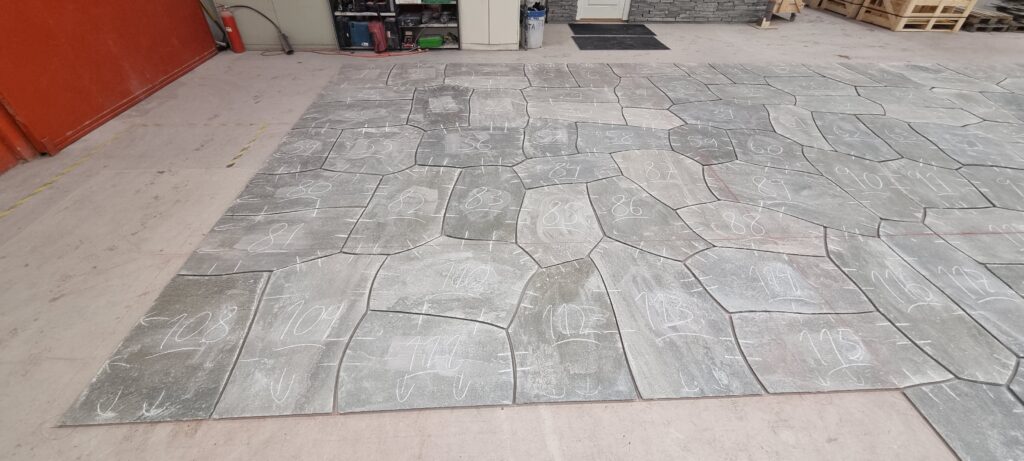
When the final stone is in place, the complete surface is reviewed before numbering begins. The project is checked against the production drawing, reference lines and full-scale markings on the floor. The craftsmen then step back and assess the overall composition. Any stone or detail that does not contribute to the intended result can still be adjusted at this stage.
- Overall dimensions
- Outer boundaries
- Corners and changes in direction
- Openings and fixed elements
- Connections between sections
- Reference lines
- Stone sizes and proportions
- Joint widths and directions
- Overall balance and expression
- Conformity with the production drawing
-
Every stone has its place
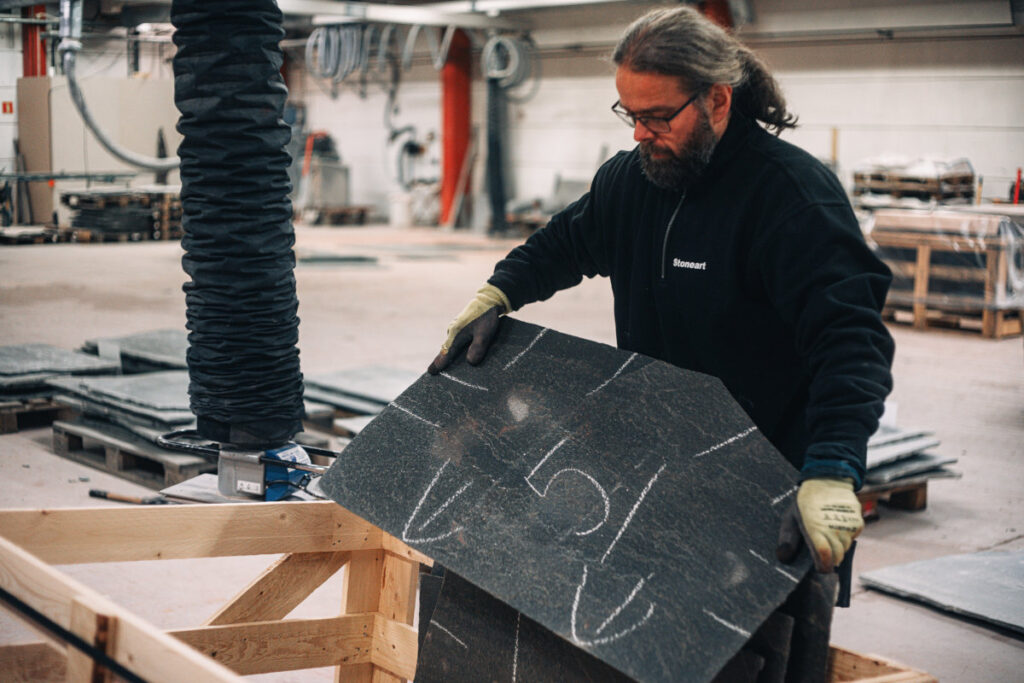
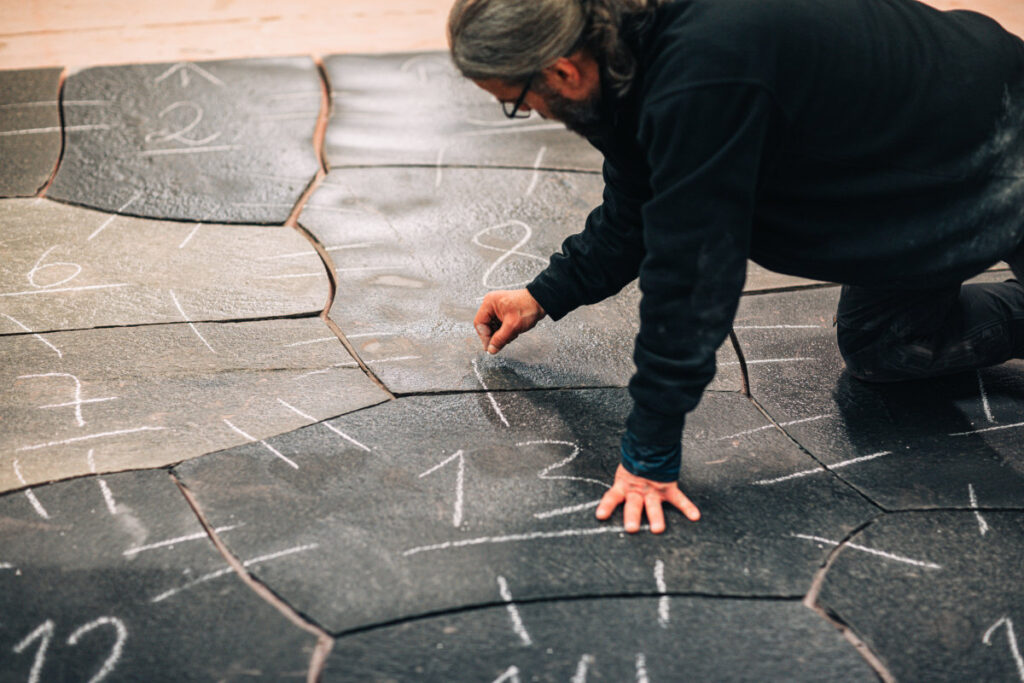
After final approval, every stone is given a unique number.
The numbering follows the planned production, installation and packing sequence. Arrows are added where necessary to identify outer edges or the correct orientation of individual stones.
Alignment marks are drawn across neighbouring stones. These marks help the installer position the stones correctly and reconstruct the original joint pattern on site.
- Unique number for every stone
- Numbering in installation sequence
- Directional arrows
- Identification of outer edges
- Alignment marks between neighbouring stones
- Reference lines across larger areas
- Section identification
- Connections between adjoining sections
-
Connected to the project drawing
The stone numbering is connected to the project drawing. Reference numbers are added at corners, section boundaries and other important positions. This creates a clear link between the completed production layout, the packing sequence and the installation drawing. The documentation allows the installer to identify the correct starting point, locate each section and understand how the numbered stones relate to the complete project.
- Starting point
- Corner references
- Section numbers
- Numbering sequence
- Installation direction
- Reference lines
- Connections between sections
- Important fixed elements and transitions

-
Ready for packing
The complete surface has been created at full scale. Every stone has been individually selected, shaped and fitted.
Forms, joints, lines and the overall composition have been reviewed. Each stone has been numbered and marked, and the project drawing has been updated with the necessary references. The project is now ready to be packed in the correct sequence for transport.